
Recipes
Warm Pear and Cinnamon Crumble with a Crisp Oat Topping
Prep
25 min
Cook
35–45 min
Total
1 h 25 min including resting
Servings
6
Difficulty
Easy
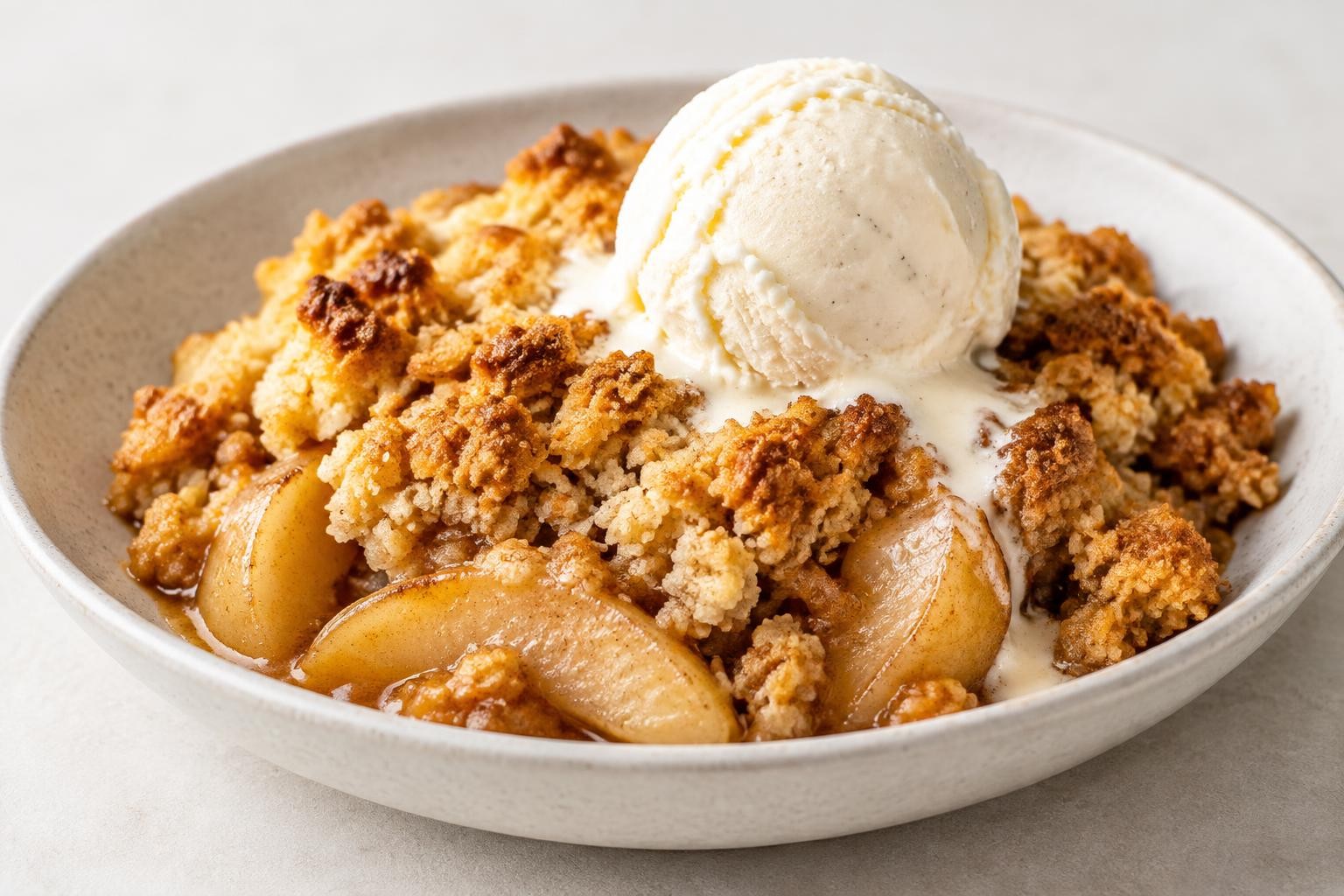
A warm pear and cinnamon crumble is one of the simplest ways to make an elegant dessert from seasonal fruit. Tender slices of pear bake in their own gently spiced juices, while a crumbly mixture of oats, flour, butter and brown sugar turns golden on top. It is a dessert built on contrast: a soft, fragrant fruit layer underneath and crisp, buttery clusters above.
Pears suit crumble particularly well because their flavor is delicate and lightly floral. Cinnamon adds warmth, but too much can overwhelm the fruit. A little lemon prevents the filling from tasting flat, while a measured amount of cornstarch helps the juices thicken rather than run across the plate.
This recipe is baked in a 20 cm / 8 in square dish and serves six. It is also a natural match for the pear-inspired identity of TastyFlavors: a familiar fruit presented in a simple, practical dessert that feels special without demanding professional pastry skills.
Recipe details
- Prep
- 25 min
- Cook
- 35–45 min
- Total
- 1 h 25 min including resting
- Servings
- 6
- Difficulty
- Easy
- Category
- Recipes
- Diet
- Vegetarian (lacto-ovo); contains wheat and dairy
- Portion size
- one sixth of the baking dish
Ingredients
Pear filling
Oat crumble topping
Serving ideas
Method
Prepare the oven and pears
Step 1: Preheat the oven to **190°C / 375°F conventional**, or about **175°C / 350°F fan-assisted**. Position a rack in the middle of the oven and place a rimmed tray beneath the rack if your baking dish is shallow.
Step 2: Lightly grease a 20 cm (8 in) square ceramic or glass baking dish. The dish should be deep enough to hold the fruit and topping without overflowing as the juices bubble.
Step 3: Wash the pears thoroughly, peel them if you prefer a smooth filling and remove the cores. Discard any bruised or damaged areas.
Step 4: Slice the pears into wedges approximately 1–1.5 cm thick. Similar thickness helps the fruit soften evenly; very thin pieces can become mushy before the topping browns.
Step 5: Put the pear slices into a large bowl and drizzle with the lemon juice. Toss gently to coat the fruit and keep the flavor bright.
Step 6: Add the filling sugar, cornstarch, cinnamon, optional ginger, vanilla and salt. Toss until no pockets of dry starch remain on the pears.
Step 7: Taste a small raw pear slice to assess its natural sweetness. If the fruit is already very sweet, keep the measured sugar; if it is tart, you can add another teaspoon or two.
Step 8: Transfer the seasoned pears to the baking dish in a fairly even layer. Pour over any juices and spice mixture remaining in the bowl.
Make the crumble topping
Step 9: In a separate bowl, combine the flour, rolled oats, brown sugar, cinnamon and salt. Stir with a fork to distribute the sugar and spices.
Step 10: Add the cold diced butter. Use your fingertips or a pastry cutter to rub it into the dry mixture until you have irregular crumbs, from sandy bits to small pea-sized clumps.
Step 11: Stop mixing when the topping holds together briefly if squeezed, then falls apart into clusters. Do not keep working it until it turns into smooth pastry dough.
Step 12: Fold in the chopped almonds if using. They provide extra crunch but are not essential for a good topping.
Step 13: Scatter the crumble evenly across the pears in loose handfuls. Do not press it flat or pack it tightly: small gaps allow steam to escape from the fruit.
Step 14: If your kitchen is very warm and the butter has softened, place the assembled dish in the refrigerator for 10 minutes before baking. Keeping the topping cold helps preserve distinct clusters.
Bake until fruit and topping are ready
Step 15: Place the dish on the middle rack and bake for approximately 25 minutes without opening the door repeatedly. The topping should begin to turn golden.
Step 16: Check the edges of the dish. The fruit juices should be bubbling, showing that the filling is becoming hot enough to thicken; if there is no bubbling, continue baking.
Step 17: Bake another 10–20 minutes, for **35–45 minutes total**, until the topping is golden brown and a thin knife slides easily into the pear layer.
Step 18: If the crumble topping turns dark before the pears are tender, cover loosely with foil and continue baking until the fruit is cooked. Avoid sealing it tightly, which traps steam and softens the crust.
Step 19: Remove the dish carefully and rest it on a heat-safe surface for **15–20 minutes**. The bubbling fruit filling is extremely hot, and the starch thickens more as it cools slightly.
Step 20: Spoon into six portions and serve warm with optional vanilla ice cream, yogurt or whipped cream. Keep the topping uncovered until serving so its crispness is not lost to trapped steam.
Tips
- Choose ripe but firm fruit. Overripe pears can release excess juice and collapse.
- Slice evenly. Similar thickness helps the fruit finish at the same time.
- Taste before adding more sugar. Pear varieties and ripeness vary in sweetness.
- Don't skip the lemon. A small amount of acid makes the fruit flavor more distinct.
- Distribute the starch well. Dry white patches of cornstarch can become unpleasant lumps when baked.
- Keep the butter cold. Warm butter makes the topping dense and greasy instead of crumbly.
- Leave loose clusters. Pressing the topping flat blocks moisture escape and produces a tougher layer.
- Wait for bubbling edges. A golden top alone does not prove the fruit is done.
- Let it rest before serving. The filling is safer to eat and thickens during a short cooling period.
- Avoid covering while hot. Condensation softens the crisp topping.
Variations
Pear and apple crumble
Replace 250 g of the prepared pears with 250 g peeled, diced baking apples. Choose similarly sized pieces so both fruits soften together. Tart apples can require a little extra sugar.
Pear and ginger
Increase the ground ginger to 1/2 teaspoon and add a small amount of finely grated fresh ginger to the filling. Ginger should brighten the pear rather than overpower it.
Chocolate and pear
Scatter 40 g finely chopped dark chocolate over the pears before adding the topping. The chocolate forms rich pockets beneath the crumbs. Reduce the sugar slightly if using sweet chocolate.
Nut-free topping
Omit the optional almonds and add 20 g extra rolled oats if you want a little more texture. Check packaged ingredients for cross-contact when serving someone with allergies.
Dairy-free version
Replace the butter with a firm plant-based baking fat designed for pastry, and serve without dairy ice cream or cream. Different fats melt differently, so the topping texture may vary.
What makes a good crumble?
A well-made crumble has two layers that are intentionally different. The fruit should be fully tender, juicy and lightly thickened, not dried out or floating in watery syrup. The topping should contain loose golden clusters rather than forming a uniform cake batter or remaining powdery and pale.
The best texture comes from cold butter worked into dry ingredients. Small pieces of butter coat some of the flour while leaving irregular clumps. During baking, the butter melts and the sugar browns, creating a crisp, crumbly crust.
The fruit layer needs enough heat to bubble actively around the edges. That bubbling is one of the best signs that the cornstarch has hydrated and thickened properly. A topping that is already golden does not guarantee that the pears underneath have finished cooking, so check both.
Choose pears that hold their shape
Bosc pears work well because they often retain their structure when baked. Anjou pears are also useful and can be juicy when ripe. Bartlett pears become very fragrant and soft but may lose their shape more quickly in the oven. A mixture of varieties offers a pleasant balance.
Choose pears that yield slightly near the stem but are not mushy or bruised. Very firm pears can require extra time; overripe pears may break down into sauce. This recipe uses about 800 g of prepared pear slices, so you may need roughly 1 kg of whole fruit before peeling and coring, depending on size.
Peeling is optional. Thin skins soften during baking, but leaving them on makes the filling more rustic. For especially delicate texture, peel the pears before slicing.
Understanding the three textures
The pears: they should be tender enough to cut with the side of a spoon but still recognizable as slices. If they dissolve into a puree, the fruit was too ripe, cut too thin or baked too long.
The juices: a spoonful of filling should look glossy and lightly thickened after resting. If it flows like water, the starch may not have dispersed evenly or the filling may not have bubbled long enough.
The topping: the best crumble combines toasted clusters and finer golden crumbs. A topping that feels like dry flour needs more baking or better butter distribution; a smooth cookie-like sheet means it was mixed or packed too firmly.
Serving ideas
The simplest way to serve crumble is warm, directly from the baking dish. Vanilla ice cream melts into the fruit and contrasts with the crisp oat topping. For a less sweet option, serve with thick plain yogurt or a spoon of lightly whipped cream.
At brunch, a small scoop can accompany a bowl of plain yogurt and fresh berries. For a dinner party, portion the crumble into warm bowls and offer the toppings separately so guests can choose their preferred richness.
Storage and reheating
Refrigerate: cool leftovers promptly and refrigerate within 2 hours. Cover the dish or transfer portions to a sealed container, keeping at 4°C / 40°F or below. Use within 3–4 days for good quality.
Reheat in the oven: warm a portion at approximately 175°C / 350°F for 10–15 minutes, until heated through. Remove the cover near the end if you want to restore some crispness.
Microwave: microwaving is convenient but softens the topping. Heat in short intervals and stir the fruit only if needed to avoid hot spots.
Freeze: baked crumble can be frozen in portions for roughly 2 months for better quality. Thaw in the refrigerator and reheat in the oven. The pears may release more moisture after thawing, so the topping will not be quite as crisp as fresh.
Troubleshooting
The topping is soggy
The pears may have released a lot of moisture or the crumble was covered while hot. Use firm pears, bake until bubbling and avoid trapping steam after removing from the oven.
The fruit is still hard
The pieces may be too thick or the oven temperature may be inaccurate. Cover loosely if the topping is already golden and continue baking until a knife slips into the fruit.
The filling is watery
Cornstarch may have clumped, the fruit may have been exceptionally juicy or the filling may not have bubbled enough. Resting helps, but the next batch may need a little more starch for particularly wet pears.
The crumble tastes floury
The topping may not have baked long enough or the butter may have been distributed unevenly. Look for overall golden color and crisp clusters, not just one browned corner.
The topping is too hard
The mixture may have been pressed into a solid slab or worked until it resembled dough. Scatter loose crumbs and avoid packing them into the dish.
FAQ
No. Thin skins soften during baking, but peeling produces a smoother texture. Choose according to your preference and the variety of pear.
Canned pears contain more liquid and are often softer. Drain them very well, reduce the sugar and expect a different texture; this recipe's baking times are developed for fresh fruit.
Yes. Mix the dry ingredients and cut in cold butter, then refrigerate in a sealed container for a day or two. Scatter over the fruit just before baking.
The fruit filling is extremely hot straight from the oven. During resting, cornstarch thickens further and the dessert becomes easier to serve without a watery pool.
Old-fashioned rolled oats create the most pleasantly rustic texture. Quick oats produce finer crumbs, while steel-cut oats are too firm for a direct substitution.
Yes, especially if the pears are sweet, but reducing the topping sugar substantially changes browning and crunch. Adjust the fruit layer first.
Yes, but use a larger dish and allow for changes in depth, baking time and moisture evaporation. That is why the automatic portions adjuster is disabled.
Yes, once properly refrigerated, although the topping is usually crispest when warm. Reheat briefly if you prefer the contrast of warm fruit and cold ice cream.
Editorial note: This recipe is instructional and does not claim physical testing. Pear variety, ripeness and baking-dish material affect cooking time and the filling's consistency.
Nutrition
Nutrition information is not available for this recipe yet.
Reviews
There are no reviews for this recipe yet.
TastyFlavors Team
The editorial team behind TastyFlavors, sharing recipes, techniques and inspiration for everyday cooking.